Best overall collecting pick: Victor Wembanyama’s Prizm rookie. Best for an established-star collection: Luka Dončić’s Prizm rookie. Best for Celtics collectors: Jayson Tatum’s Prizm rookie. This 2026 guide ranks the best NBA rookie cards by collecting purpose—not predicted returns—and shows you how to check the exact version before buying.
- The best NBA rookie cards match your collecting goal; Victor Wembanyama’s Prizm rookie leads this collecting shortlist.
- HobbyAlpha suits NBA card collectors who want sold-comp research, buy/hold/sell verdicts, and portfolio tracking together.
- Compare the exact rookie card, parallel, condition, and grade—not just the player’s name.
- A collectible card is not automatically a good purchase at the seller’s asking amount.
Why this matters
A player can be the right choice while the card is the wrong purchase. Base cards, parallels, raw copies, and graded copies are different comparison groups; treating them as interchangeable produces misleading valuations.
For your 2026 shortlist, separate two decisions: which rookie card belongs in your collection, and whether the particular copy makes sense to buy. The rankings below answer the first question. Sold comps and condition checks answer the second.
HobbyAlpha combines NBA sports card valuation, eBay sold-comp research, buy/hold/sell verdicts, and portfolio tracking. Use that evidence to research a purchase, not as a promise of an exact sale result.
What makes the best NBA rookie cards?
These criteria put card identity and collecting purpose ahead of player hype:
- Clear rookie identity: Confirm that the card belongs to the player’s rookie release, rather than assuming every early-career card is a rookie.
- Exact version matching: Separate the base card from Silver, other parallels, and numbered versions.
- Relevant sold evidence: Match completed sales by card identity, condition, and grading details before drawing a conclusion.
- Inspectable condition: Check the actual copy’s corners, edges, surface, and centering rather than relying on a listing title.
- A defined collecting role: Know whether you want a player centerpiece, a team connection, or a parallel-focused project.
- A workable exit: Research comparable sales before assuming you can resell a particular version on your preferred timetable.
For 2026, these are purchase filters, not a scoring formula. No player’s reputation removes the need to inspect the card.
Best NBA rookie cards at a glance
The order below follows collecting use cases. It does not rank expected investment performance or imply that any seller’s asking amount is justified.
| Rookie card | Best for | Standout characteristic | Key limitation |
|---|---|---|---|
| Victor Wembanyama Prizm rookie | Modern rookie centerpiece | A rookie card tied to his San Antonio debut | Base and parallel versions require separate research |
| Luka Dončić Prizm rookie | Established-star collection | A Dallas-era rookie identity | Later-career achievements do not establish a copy’s value |
| Anthony Edwards Prizm rookie | Minnesota player collection | A rookie anchor for an Edwards collection | Raw condition must be assessed copy by copy |
| Shai Gilgeous-Alexander Prizm rookie | Rookie-team history | A Clippers-era rookie rather than a later Oklahoma City card | Rookie-team imagery must suit your collecting goal |
| Jayson Tatum Prizm rookie | Celtics collection | A direct Boston rookie connection | Base and parallel demand cannot be treated as equivalent |
| Nikola Jokić Prizm rookie | Center-focused collection | A Denver rookie anchor for a center collection | Broad player appeal does not prove demand for every version |
1. Victor Wembanyama: best for a modern rookie centerpiece
Victor Wembanyama’s Prizm rookie is the default collecting pick on this list for someone building around his NBA arrival. Start by deciding whether you want the base card or a particular parallel; those are separate purchases, not interchangeable substitutes.
Best for: Collectors who specifically want Wembanyama as the centerpiece of a modern NBA rookie collection.
Victor Wembanyama Prizm rookie pros:
- Provides a direct connection to his San Antonio rookie identity.
- Gives a Wembanyama collection a clearly defined starting point.
- Lets you research a base-card route separately from a parallel-focused route.
Victor Wembanyama Prizm rookie cons:
- Similar-looking versions require careful identification.
- Player excitement does not validate the seller’s valuation.
Before buying, read the listing alongside clear front-and-back photographs. A player name and a Prizm label are not enough to establish the exact card.
Verdict: Buy only after matching the version, condition, and relevant sold comps.
2. Luka Dončić: best for an established-star collection
Luka Dončić’s Prizm rookie fits a collection centered on a player with an established NBA career rather than a newly introduced prospect. The card carries his Dallas rookie identity; judge it as that specific collectible, not as a generic representation of his career.
Best for: Collectors who want a rookie anchor for a Dončić collection.
Luka Dončić Prizm rookie pros:
- Connects an established NBA player to his rookie release.
- Preserves the Dallas chapter of his collecting history.
- Provides a defined card family for base-versus-parallel research.
Luka Dončić Prizm rookie cons:
- Career achievements do not establish the value of an individual copy.
- Different grades and parallels cannot share one assumed valuation.
Keep raw and graded comparisons separate. If you want a graded copy, match the grading company and grade rather than treating every slab as equivalent.
Verdict: Buy when the exact copy fits your collection and its comparable sales support the purchase.
3. Anthony Edwards: best for a Minnesota player collection
Anthony Edwards’s Prizm rookie belongs on a shortlist built around his Minnesota rookie connection. It is a focused choice for an Edwards collector, not a reason to buy whichever version happens to appear first in search results.
Best for: Collectors building an Edwards-focused or Minnesota-focused rookie collection.
Anthony Edwards Prizm rookie pros:
- Gives an Edwards collection a direct rookie anchor.
- Fits a Minnesota collecting theme.
- Supports a deliberate choice between a base card and a specific parallel.
Anthony Edwards Prizm rookie cons:
- Raw copies require individual condition assessment.
- A listing’s description does not replace photographs of the actual card.
For a raw copy, request images that reveal the surface rather than only a straight-on photograph. Do not assign an expected future grade when deciding what the card is worth to you today.
Verdict: Buy the visible condition, not an imagined grading result.
4. Shai Gilgeous-Alexander: best for rookie-team history
Shai Gilgeous-Alexander’s Prizm rookie represents his Clippers beginning, not his later Oklahoma City chapter. That distinction makes it a useful choice for collectors who value a player’s original NBA card identity.
Best for: Collectors who prioritize rookie-team history over matching a later-career uniform.
Shai Gilgeous-Alexander Prizm rookie pros:
- Documents his Clippers rookie connection.
- Adds an early-career anchor to a player collection.
- Makes the difference between rookie identity and later team identity explicit.
Shai Gilgeous-Alexander Prizm rookie cons:
- Clippers imagery will not satisfy every Oklahoma City-focused collector.
- Research must distinguish the rookie from later Prizm releases.
Check the release and card identification instead of searching only by player name. A later card can suit your collection, but it should not enter a rookie-card comparison group.
Verdict: Buy if the Clippers rookie identity is the collectible you actually want.
5. Jayson Tatum: best for a Celtics rookie collection
Jayson Tatum’s Prizm rookie is the clearest team-focused selection here for a Celtics collector. It combines a Boston connection with a player-specific rookie collecting goal, giving you a concrete reason to choose it over an unrelated trending card.
Best for: Celtics collectors seeking a Tatum rookie anchor.
Jayson Tatum Prizm rookie pros:
- Fits a Boston-focused collection directly.
- Connects a Tatum collection to his NBA beginning.
- Gives you a specific release to research before considering parallels.
Jayson Tatum Prizm rookie cons:
- Team attachment can distract you from condition problems.
- Sales of one parallel do not establish demand for another.
Set your condition requirements before evaluating listings. If a visible defect would bother you in the collection, do not dismiss it simply because you like the player or team.
Verdict: Buy for the Celtics connection, but keep the condition standard unchanged.
6. Nikola Jokić: best for a center-focused collection
Nikola Jokić’s Prizm rookie gives a center-focused collection a Denver rookie anchor. Choose it because Jokić belongs in the collection you are building, not because you assume every prominent player’s rookie card follows the same market pattern.
Best for: Collectors building around NBA centers or Jokić specifically.
Nikola Jokić Prizm rookie pros:
- Fits a clearly defined positional collecting theme.
- Preserves his Denver rookie identity.
- Provides a player-focused alternative to a prospect-led shortlist.
Nikola Jokić Prizm rookie cons:
- Player recognition does not establish demand for every card version.
- An isolated sale is not enough to describe the wider market.
Research the exact version you intend to own. If the relevant sales are difficult to match, do not fill the gap with results from a different parallel or condition category.
Verdict: Buy for the center-focused collecting role; wait when the comparison evidence is unclear.
How to turn a shortlist into a purchase decision
A 2026 buying decision needs a repeatable process. Use these steps for any card above rather than letting the ranking substitute for research.
Confirm identity
Complete 5 identity checks: player, release, card number, parallel, and any serial numbering. Then record whether the copy is raw or graded; for a graded card, include the grading company and grade.
Keep those details together. A search result that matches the player but misses the parallel is not a direct comp.
Match condition
Inspect corners, edges, surface, and centering. Compare the actual copy with cards in the same condition category, and distinguish visible condition from a seller’s prediction about grading.
A raw card is not equivalent to a particular graded outcome. Treat future grading as a separate decision with its own uncertainty.
Review sold comps
Read the underlying sold results rather than stopping at a displayed estimate. Confirm that each comparison belongs to the same card group, and check whether one unusual result is driving your impression.
HobbyAlpha supports this NBA sports card valuation workflow with eBay sold-comp pricing and buy/hold/sell verdicts. A verdict is decision support, not a guaranteed transaction result.
Set limits
Write down 2 totals before committing: your maximum all-in acquisition amount and your estimated net proceeds if you later sell. Include applicable transaction costs rather than treating the card amount as the entire decision.
Do not force an investment case onto a personal collection purchase. Enjoyment is a valid reason to collect; it is not evidence of future resale performance.
Record the decision
Choose among 3 outcomes: buy the matched copy, wait for better evidence, or skip the purchase. Record the reason so that a later change in player attention does not rewrite your original decision.
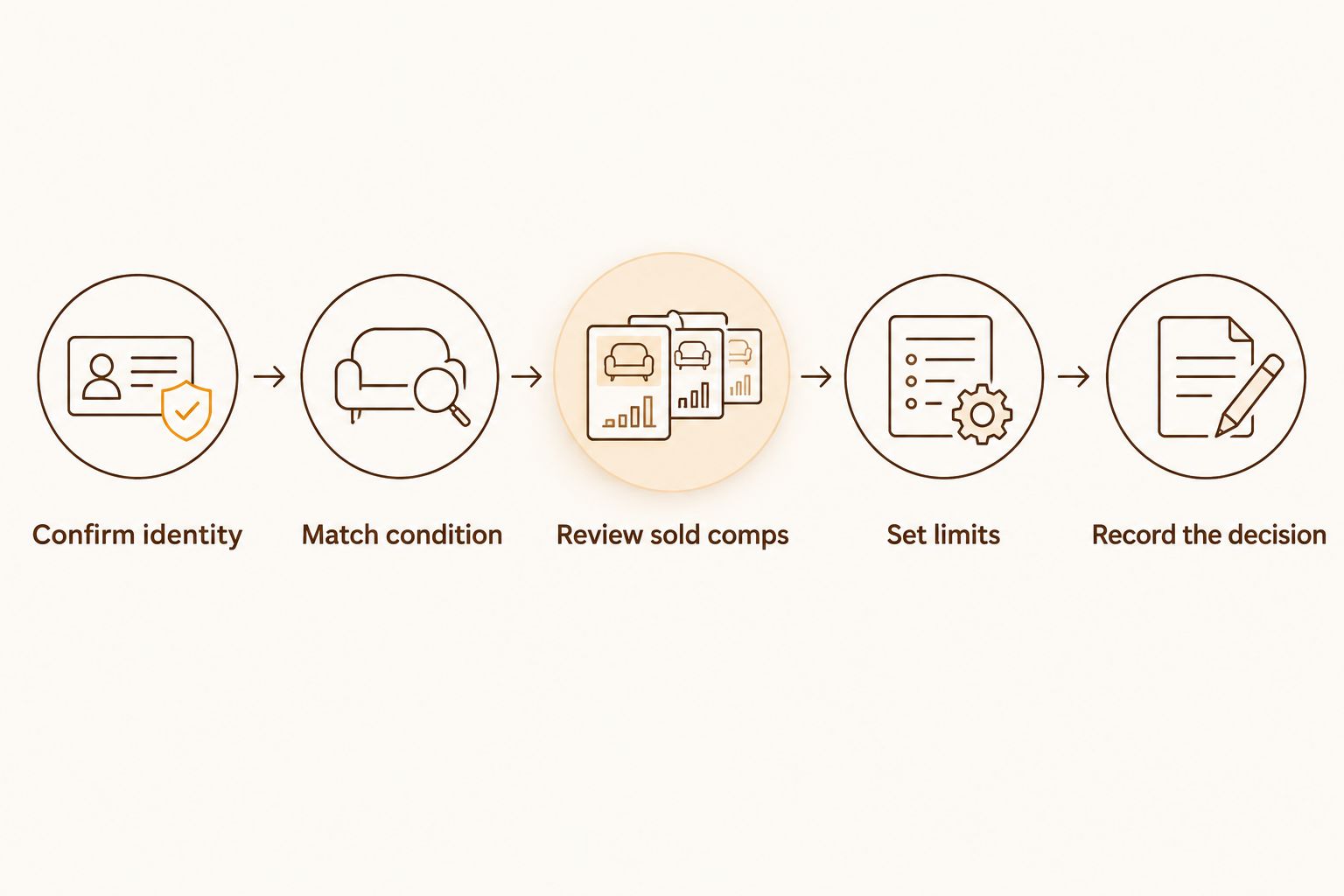
A documented decision also makes portfolio tracking more useful. Keep the card identity, condition, acquisition record, and reason for owning it together rather than saving only a headline estimate.
How this shortlist is ranked
This 2026 ranking prioritizes distinct collecting purposes: a modern centerpiece, an established-star collection, Minnesota, rookie-team history, Boston, and centers. Prizm provides a consistent release family across the selections, but that consistency does not make different versions financially equivalent.
The shortlist is not a claim that these cards outperform other rookies. No return forecast, resale timetable, or guaranteed value is attached to the order.
Which NBA rookie card should you choose?
Choose Victor Wembanyama’s Prizm rookie as the default modern collecting centerpiece. Choose Luka Dončić for an established-star collection, or follow your existing player, team, or positional theme instead of starting an unrelated collection because a card ranks highly.
If your goal is budget control, define your spending limit before selecting a parallel or grade. Do not assume that a base card is automatically the right purchase without checking the particular copy and its comps.
For 2026, the decisive rule is simple: buy the exact collectible you understand, not a player name attached to an unexamined listing.
FAQ
What are the best NBA rookie cards to buy in 2026?
This collecting shortlist starts with Victor Wembanyama’s Prizm rookie, followed by rookie selections for Luka Dončić, Anthony Edwards, Shai Gilgeous-Alexander, Jayson Tatum, and Nikola Jokić. Choose by collecting purpose, then evaluate the exact version, condition, and sold comps before buying.
Which NBA rookie card is best for a beginner?
The best beginner choice is an identifiable rookie card of a player you want to collect. Start with a clearly defined version and learn to match sold comps before adding unfamiliar parallels or grading assumptions.
Are Prizm base rookies better than parallels?
Neither is automatically better. Base cards and parallels are different collectibles, so compare each version with its own relevant sales and choose the one that fits your collection.
Should I buy raw or graded NBA rookie cards?
Choose raw or graded based on the condition evidence you can assess and the collectible you want to own. Compare raw copies with raw copies, and match grading company and grade when researching graded cards.
Can I use an active listing to value my rookie card?
An active listing shows a seller’s asking amount, not a completed transaction. Use relevant sold comps as evidence and check that the card version and condition match.
Does a buy verdict guarantee that a rookie card will increase in value?
No, a buy verdict does not guarantee appreciation or an exact sale result. HobbyAlpha provides verdicts, sold-comp pricing, and portfolio tracking to support research rather than promise an outcome.
What should I do when I cannot find matching sold comps?
Wait or widen your research without treating a different card as a direct equivalent. Keep the version and condition distinctions visible rather than turning unrelated sales into a precise valuation.
One last thing
The same player can belong in your collection while a particular copy deserves a skip. Before buying, finish this sentence: I want this exact version because… If your answer names only the player, return to the card identification and condition checks.